
Dr Umed Cosmetics provides skin cancer checks, clinical assessment of moles and lesions, dermoscopy, biopsy where appropriate, treatment of diagnosed skin cancers, and follow-up care. Assessment is carried out by medical practitioners, and the clinic is led by Dr Umed Shekhawat, a Specialist General Practitioner who holds a Diploma in Skin Cancer Medicine and a Diploma in Dermoscopy.
Skin cancer care is a medical service and we keep it separate from our cosmetic work. If you have noticed a change in your skin, book a skin check rather than a cosmetic appointment.

Our medical practitioners provide skin assessment in line with current clinical guidelines. Skin checks are offered to assess skin changes that may require further investigation or management. The frequency of skin examination is determined based on individual risk factors and clinical assessment.
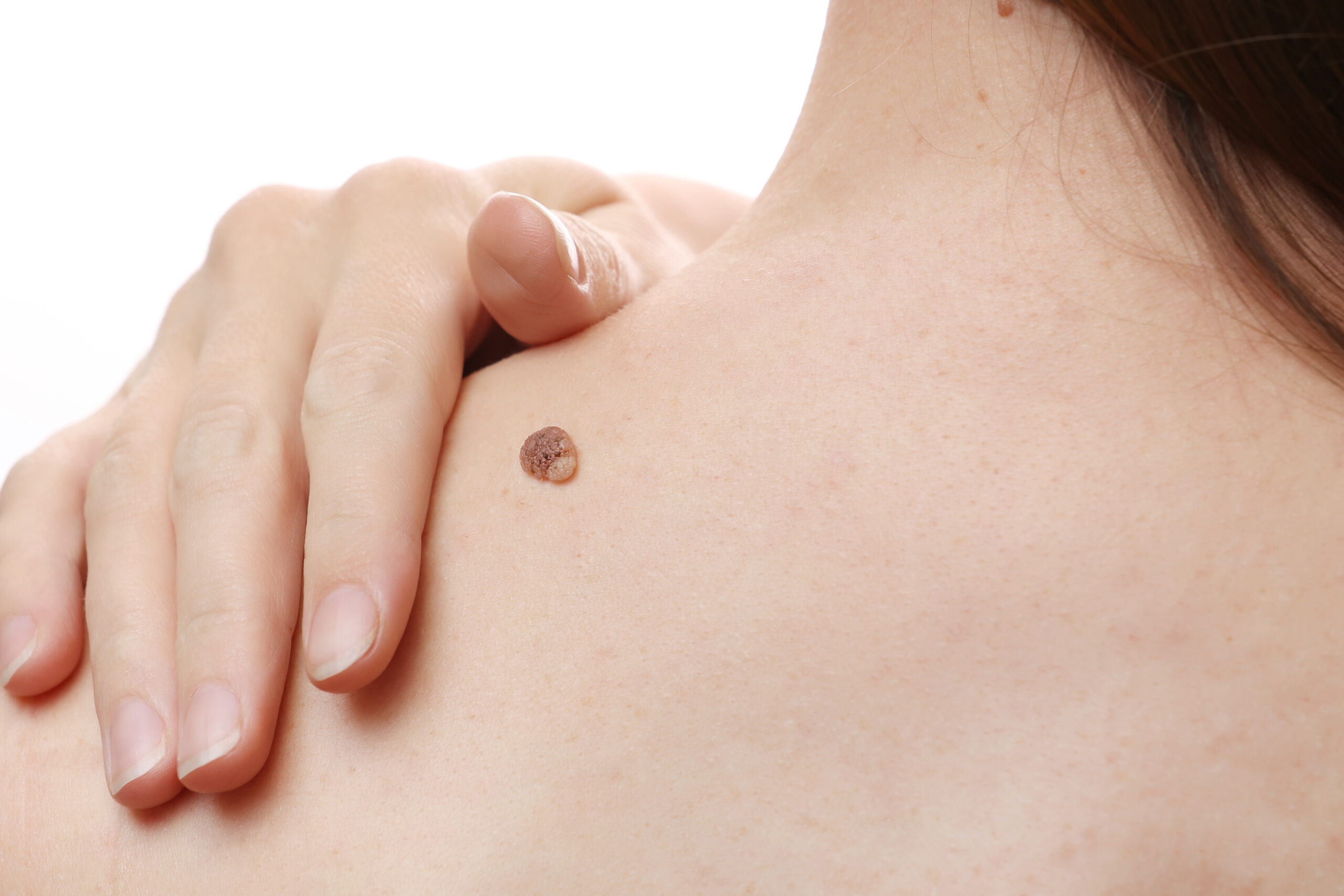
Following a comprehensive clinical assessment, medical practitioners may discuss suitable management approaches for diagnosed skin lesions in line with current clinical guidelines. Where clinically indicated, management options may include procedures such as cryotherapy (freezing) ,Photodynamic Therapy (PDT) or surgical excision removal. All decisions regarding treatment are individualised and made after informed discussion with patients about potential benefits, risks, and alternatives.

Following clinical assessment, medical practitioners may offer removal of skin tags or selected lesions where clinically appropriate. Procedures may utilise Radiofrequency (RF) technology and are performed under local anaesthesia to spurt patient comfort. All treatments are provided in accordance with current clinical standards and after informed consent.

Follow-up appointments are offered after skin cancer surgery or assessment of suspicious skin lesions to support ongoing clinical review. These consultations are conducted in accordance with current clinical guidelines and are tailored to individual findings, treatment outcomes, and risk factors.
Our medical practitioners provide skin assessment in line with current clinical guidelines. Skin checks are offered to assess skin changes that may require further investigation or management.
Tell the practitioner about anything that concerns you at the start of the appointment, even if you think it is minor.
Most lesions examined at a skin check need nothing more than monitoring. Where a lesion does need further investigation, the usual next steps are:
A dermatoscope allows the practitioner to examine structures within a lesion that are not visible to the naked eye. In many cases this is enough to determine that a lesion is benign, or that it should be monitored, or that it should be biopsied.
Where clinically indicated, a sample of the lesion may be taken and sent to a pathology laboratory for examination. This is performed under local anaesthetic. A biopsy is how a diagnosis is confirmed, and treatment decisions are generally made on the basis of the result rather than before it.
Your practitioner will explain what type of biopsy is proposed, what it involves, how long results usually take, and how you will receive them.
Following a comprehensive clinical assessment, medical practitioners may discuss suitable management approaches for diagnosed skin lesions in line with current clinical guidelines. Where clinically indicated, management options may include:
Freezing of a lesion using liquid nitrogen. Generally used for certain superficial lesions. May cause stinging during treatment, and the treated area typically blisters, scabs and heals over a period of days to weeks.
A light-based treatment used for certain superficial lesions and areas of sun damage, involving application of a topical agent followed by light exposure. It is not appropriate for all lesion types.
Removal of a lesion under local anaesthetic, with the tissue sent for pathology. Excision leaves a wound that requires closure and a scar. The size and position of the scar depend on the size and site of the lesion.
More complex cases are referred. Where a lesion requires specialist management, reconstruction beyond what can be done in the clinic, or care we are not the right provider for, we will refer you and explain why.
All decisions regarding treatment are individualised and made after informed discussion with patients about potential benefits, risks and alternatives, including the option of monitoring rather than treating.
Follow-up appointments are offered after skin cancer surgery or assessment of suspicious skin lesions to support ongoing clinical review. These consultations are conducted in accordance with current clinical guidelines and are tailored to individual findings, treatment outcomes and risk factors.
Follow-up may include wound review, discussion of pathology results, examination of the treated site, and setting a recall interval for your next full skin check.
To book a skin check or have a lesion assessed, book a consultation or call 07 5627 2200.
If you have noticed a change that concerns you, say so when you book so the appointment can be arranged appropriately.
Trustindex verifies that the original source of the review is Google. Dr Umed is amazing!!! I recommend him to all my friends. I am always so happy with the results.Posted on GoogleTrustindex verifies that the original source of the review is Google. Nurse Angie is amazing! She keeps me looking refreshed and natural every time. Gentle, professional, and so skilled, highly recommend!Posted on GoogleTrustindex verifies that the original source of the review is Google. I went to Dr Umed to have the fat dissolving injections in my chin. He was excellent from the start. He was welcoming, explained the procedure and was realistic that it would take a few treatments to reach my desired goal. He was professional and his staff were friendly as well. I have had a really great result with the first treatment, better than what I expected from my first treatment. I have just had my second treatment so I am excited to see the results from this one. I'm also booked in to have his non-surgical rhinoplasty done in November.Posted on GoogleTrustindex verifies that the original source of the review is Google. Had nose filler with Dr. Umed and absolutely love my results! My nose looks so natural and perfectly straight. The whole process was quick and painless. Highly recommend!Posted on GoogleTrustindex verifies that the original source of the review is Google. Great experience, Dr Umed is very experienced and talentedPosted on GoogleTrustindex verifies that the original source of the review is Google. Dr Umed made me feel calm and thoroughly explained the injectables to me after I discussed my goals. It wasn't painful and the outcome exceeded my expectations! Thank you so much ☺️Posted on GoogleTrustindex verifies that the original source of the review is Google. Thank you to Natalie and Nurse Angie for taking the time to personally contact me and immediately address all concerns I had from a previous visit. Usually clinics would be annoyed and dismiss any issues you have with treatment afterwards but Dr Umeds, Natalie and Nurse Angie took their time to ensure their patients are always left feeling happy afterwards and I truely do appreciate this and will be returning again. The girls are SO lovely, and nurse Angie’s results are fantastic. I’m looking forward to my next month visit. Thank you ladies 💙Posted on GoogleTrustindex verifies that the original source of the review is Google. Highly recommend DR Umed clinics for anti wrinkle and filler treatments. I have been seeing the team on the Gold Coast for roughly 4 years now. I normally see Dr Umed himself- who is amazing! But I also strongly recommend Nurse Vish. He is the most gentle injector I have EVER experienced. He is also super friendly and makes you feel really comfortable about the treatment. No matter who treats you at the hope island clinic (sometimes I just select any practitioner when booking online) you will always get 10/10 professional service. All the staff are lovely and professional. And the results, are exceptional. Thank you DR Umed and Vish.
